Your Feelings About AI Aren't Irrational — They're Information


There is a particular kind of discomfort that comes with living through a moment history hasn't caught up to yet. No framework fully fits it. No expert has the complete answer. You are not behind — you are simply in the middle of something that hasn't finished happening yet. And the feeling that produces is not weakness. It is awareness.
Most of the conversation about AI is happening at the surface. What it can do. What it will replace. Who will win and who will lose. But very little of that conversation addresses what it actually feels like to be a human being in the middle of this — to watch the ground shift beneath the things you worked for, built your identity around, and planned your future on.
That experience deserves more than a productivity tip or a listicle about skills to learn before 2030.
What We're Really Afraid Of
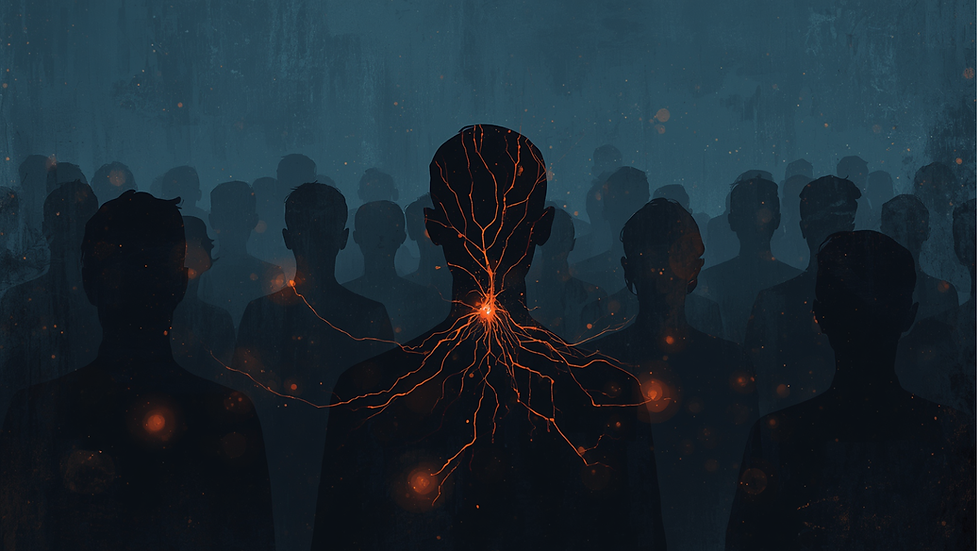
The anxiety most people feel about AI is rarely just about a job. That is the surface layer. Underneath it is something older and more fundamental — the fear of becoming unnecessary. Of losing relevance. Of a world that moves forward without you, or worse, one that moves forward and doesn't notice you were ever there.
That fear is worth taking seriously, not because it is inevitable, but because it is human.
Every generation has faced a version of it — the moment when the tools change fast enough that a person's accumulated knowledge suddenly feels fragile. What is different now is the speed, the scale, and the fact that this particular shift reaches into cognitive work, creative work, emotional work — the domains we told ourselves were distinctly and permanently human.
No wonder people feel unsettled. The unsettledness is proportionate to what is actually happening.
Feelings Are Not Obstacles. They Are Data.
Emotional intelligence does not ask you to feel better about hard things. It asks you to get more honest about what you actually feel — because your emotions are not random. They are responses. They tell you what you value, what you fear losing, and where your sense of identity is most tightly held.
If AI anxiety is showing up persistently in your life, the question worth sitting with is not how do I make this feeling go away? It is what is this feeling protecting? What does it point to that matters deeply to you? Because inside that answer is not just the source of the fear — it is also a clearer picture of what you are actually here to do, and what no algorithm can replicate about the way you do it.
The people who will move through this period with the most integrity are not the ones who felt no fear. They are the ones who let the fear ask its question and stayed present long enough to hear the answer.
The Deeper Disruption Nobody Is Naming
Here is what doesn't get said enough: AI is not just disrupting industries. It is disrupting identity. For decades, many of us have built our sense of self around what we produce — our output, our expertise, our professional value. When a technology arrives that can produce faster, cheaper, and without fatigue, it doesn't just threaten the job. It threatens the story we have been telling about who we are.
That is a grief worth naming. Not because the story was wrong, but because any story we outgrow deserves to be honored before we write the next one.
The question this moment is quietly asking all of us is not what can you do that AI cannot? That question is too narrow and too anxious. The deeper question is who are you when you strip away the productivity? What remains when the output is no longer the measure? That is not a comfortable question. It is also one of the most important questions a person can sit with — and one that has nothing to do with technology, and everything to do with being alive.
What This Actually Calls For
Not optimization. Not a five-step plan. What this moment calls for is a kind of radical honesty — about what you value, what you fear, and what kind of human being you want to be on the other side of all this change.
Your feelings about AI are not noise to be managed. They are an invitation to know yourself more clearly than you did before. And that kind of knowing — no model, however sophisticated, can do for you.


What makes foodle entertaining is the combination of vocabulary and food knowledge. You might recognize the answer instantly but suddenly forget how it is spelled. Or you may have all the right letters and still somehow fail to see the word sitting directly in front of you.
Horarios de Sorteos es una excelente fuente para consultar información útil. En cuanto a esta publicación, comparto la idea de que la educación pública puede fomentar tanto el aprendizaje como la creatividad. Un análisis equilibrado que invita a reflexionar y debatir sobre posibles mejoras del sistema educativo.
Anyone who chooses to explore the blog can discover valuable answers to common questions. This post addressed the topic more thoroughly than many similar articles. The author explained why each detail matters. I appreciated the practical context provided throughout. The conclusion encouraged readers to continue learning. This website deserves another visit.
I found valuable content in every section of this article. The author explained complicated ideas using simple and direct language. I also appreciated the way practical advice was connected with background information. That made the post more complete and easier to trust. The final paragraph reinforced the most important lessons. I hope more articles follow this format.
This piece did a great job of organizing information logically, making it easy to follow from start to finish. The structure meant nothing needed to be reread just to understand the main argument being made. That clarity is exactly what makes writing stand out among more useful resources on similar subjects. Thanks for such a logically organized and genuinely clear piece.