Collective Trauma: How Global Crises Shape Our Nervous Systems

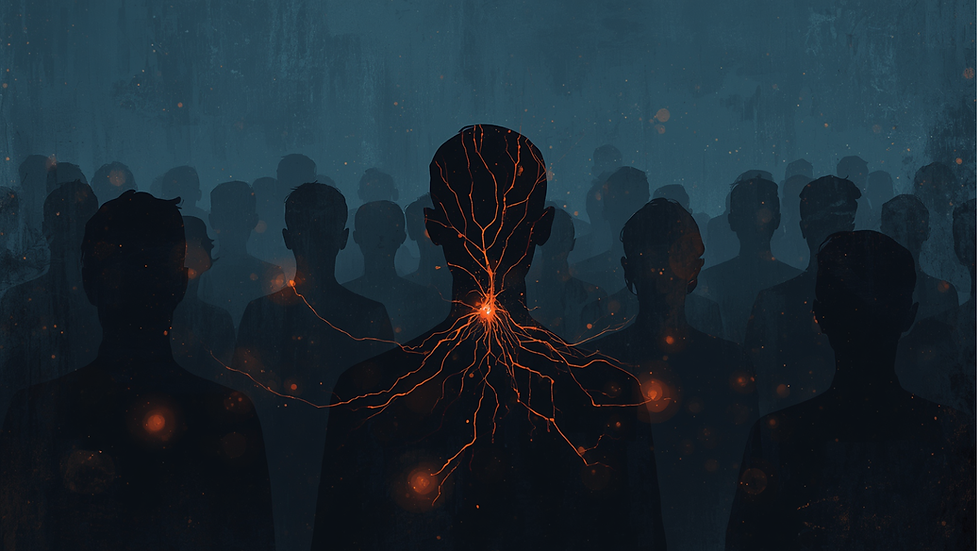
There is a kind of exhaustion in this era of history that does not trace back to any single event in a person's life. It is not the fatigue of a bad week or a difficult relationship. It is something more diffuse — a low, persistent hum of dread that seems to live beneath daily life, surfacing in moments of quiet, in scrolling, in the particular heaviness that follows another headline about war, climate disaster, economic instability, or social fracture. This is collective trauma, and unlike individual trauma, it does not require personal proximity to a single traumatic event. It accumulates simply through prolonged exposure to a world that feels, more days than not, like it is under siege from multiple directions at once.
Collective trauma operates differently from the trauma frameworks most people are familiar with. It is not always a single rupture followed by a recovery arc. It is often ambient and ongoing — the trauma of living inside a slow-moving crisis with no clear endpoint, whether that crisis is ecological, geopolitical, economic, or some combination all at once. This ambient quality makes it harder to name, and therefore harder to address. A person struggling in the aftermath of a specific traumatic event has, at minimum, a clear story to tell about what happened. A person struggling under the weight of collective trauma often cannot point to a single incident. They only know that something in the general atmosphere of being alive right now feels heavier than it used to.
This matters because unnamed distress tends to get misdiagnosed, both by individuals and by the systems meant to support them. A person carrying collective trauma may be told, implicitly or explicitly, that their distress is disproportionate — that they should simply consume less news, worry less, focus on what they can control. This advice, however well-intentioned, often lands as a kind of gaslighting, because it treats a rational response to genuinely destabilizing global conditions as though it were solely an individual regulation problem. Some of the distress people carry right now is not a distortion. It is an accurate emotional response to real and ongoing instability.
At the same time, an accurate response can still become an unsustainable one if it is never tended to. The nervous system was not designed to hold constant threat-awareness indefinitely — it was designed for acute danger followed by recovery, not the chronic, low-grade activation that comes from being perpetually informed about crises across the entire globe, most of which are entirely outside any individual's capacity to influence. This is the particular bind of collective trauma in the information age: caring about the world has never required more emotional bandwidth than it does now, because we have never had this much simultaneous visibility into its suffering.
What helps, research and clinical experience both suggest, is not detachment but discernment — distinguishing between the awareness necessary to remain a responsible, engaged member of a community, and the compulsive consumption that offers no additional understanding, only additional dread. There is a meaningful difference between staying informed and doomscrolling, even though both can look identical from the outside. The former tends to produce, at minimum, some sense of orientation or capacity to act. The latter tends to produce only the accumulation of helpless witnessing, absorbed in quantities the nervous system was never built to metabolize.
Collective trauma also, paradoxically, calls for collective healing — a fact easily lost in cultures that treat mental health primarily as an individual pursuit. Trauma that arises from social and communal conditions is rarely resolved through individual coping strategies alone. It requires the very thing that global instability tends to erode: genuine community, shared witnessing, spaces where people can name what they are carrying without being told it is an overreaction. Isolation intensifies the impact of collective trauma; connection, even in small doses, meaningfully softens it.
Perhaps the most important thing to understand about collective trauma is that feeling its weight is not a malfunction. It is evidence of an intact capacity for empathy in a world that gives that capacity an enormous amount to respond to. The task is not to feel less. It is to find sustainable ways of carrying what you feel — through community, through discernment about what to witness and how often, through remembering that caring about the world and being consumed by it are not, in fact, the same thing, even when they can feel indistinguishable from the inside.


Been trying out Nano Banana for AI image generation lately. You just describe what you want in plain text and it generates something — built on Gemini so the quality is decent. Handles a range of styles from realistic to anime. Useful for quick concept visuals without needing to set up anything locally.
Whether you are completely new to Strands or regularly play the daily puzzle, understanding how hints work can make the experience more enjoyable. strands hint
The distinction between personal trauma and the persistent weight of collective instability is well made. Not every form of distress can be reduced to an individual failure to cope; recognizing that broader context can make conversations about resilience feel much more grounded. In a different context, Block Blast puzzle strategy offers a small, practical way to shift attention toward pattern recognition, decisions, and something concrete within reach.
The distinction between individual trauma and the ongoing weight of collective instability is thoughtfully explained here. I especially appreciate the point that not every form of distress is an overreaction; sometimes uncertainty, conflict, and repeated exposure to disturbing events naturally affect how people experience everyday life. The broader idea of recognizing patterns before deciding how to respond also connects nicely with strategy, where a Blox Fruits trading reference can help turn a complex set of choices into something easier to evaluate.
5 letter words is especially valuable during games where every attempt carries importance. Accurate suggestions reduce wasted guesses and help players move closer to the correct answer through a more structured solving process.